
Social Security trust fund depletion is moving closer by the year, and right now, a new analysis puts the damage in very concrete terms: retirees could lose an average of around $500 a month in benefits as early as 2032. The Committee for a Responsible Federal Budget, a fiscal policy think tank, published the study and found that Social Security insolvency would trigger an automatic 24% cut in the typical monthly payment. At the time of writing, no federal fix has been passed, and the clock is running.
Also Read: IRS Confirms June Tax Refund Wave for Taxpayers
Social Security Insolvency Study: 2032 Signals Sharp Benefits Cuts
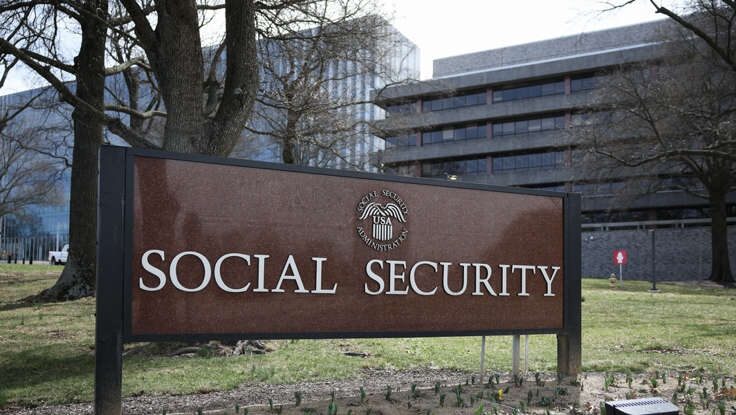
The Social Security trust fund has been under pressure for a while now. For 16 consecutive years, the program’s benefit costs have outrun its cash income, and also, the ratio of workers to retirees keeps narrowing as the baby boom generation ages out of the workforce. The trust fund reserve covers that gap, and when it runs dry, Social Security benefits reduction kicks in automatically under current law.
The Social Security Administration moved its projected insolvency date for the Old-Age and Survivors Insurance Trust Fund from 2033 to end of 2032, citing the One Big Beautiful Bill Act’s effect on benefit taxation. That is a full year faster than what last year’s Trustees Report projected, and the annual 2026 Trustees Report is expected this month, which may revise the timeline further.
What Social Security Trust Fund Depletion Means For Your Check
The Social Security $500 cut forecast is, technically, an average. Some states face considerably more. The CRFB analysis found the impact would reach between 10% and 23% of each state’s population, also depending on average local benefit levels. States with the steepest projected monthly cuts include Connecticut at $556, New Jersey at $554, New Hampshire at $553, Delaware at $549, Maryland at $541, Washington at $531, and Minnesota at $530, among others.
Social Security trust fund depletion does not mean payments stop altogether. Even after the reserves run out, payroll tax revenue keeps flowing in, and the program keeps paying benefits at a reduced level, somewhere around 77 to 80 cents on the dollar compared to what retirees get right now.
The Committee for a Responsible Federal Budget stated:
“No state would be spared from the potentially devastating effects of insolvency.”Committee for a Responsible Federal Budget report, June 2026
Who Gets Hit The Hardest By Social Security Cuts 2032
The Senior Citizens League survey from 2025 found that 73% of retirees depend on Social Security for more than half their income, and also, 39% rely on it for all of their income. A Social Security benefits reduction of $500 or more a month is, for a lot of those households, the difference between getting by and not getting by at all. Social Security insolvency, at that level of dependency, is not an abstract fiscal problem.
More than 63 million Americans currently receive Social Security payments right now. The Social Security $500 cut forecast hits harder in high-benefit states, but the CRFB’s point is clear: Social Security trust fund depletion is a national problem, not a regional one.
Can Congress Actually Fix Social Security Trust Fund Depletion In Time
One proposal that keeps coming up is eliminating the payroll tax income cap, currently at $184,500, which lets higher earners off the hook for Social Security taxes on income above that figure. There are also discussions around benefit adjustments and reallocation from the disability trust fund, though none of these have cleared both chambers so far.
Any bill addressing Social Security cuts in 2032 would need to clear a 60-vote threshold in the Senate, which makes bipartisan agreement the only real path. In a March Senate Budget Committee hearing focused specifically on this issue, Sen. Sheldon Whitehouse (D-R.I.) stated:
“We can do this. It’s actually not all that hard or complicated. And the sooner we do it, the better off everyone will be.”
Social Security benefits reduction on this scale would be avoidable with legislative action, but also, the window between now and 2032 is shorter than it sounds. Social Security trust fund depletion is a problem that compounds over time, and right now, Washington has not delivered a solution.
News Link: https://watcher.guru/news/social-security-trust-fund-depletion-could-cost-retirees-500-in-2032